
Kinship care
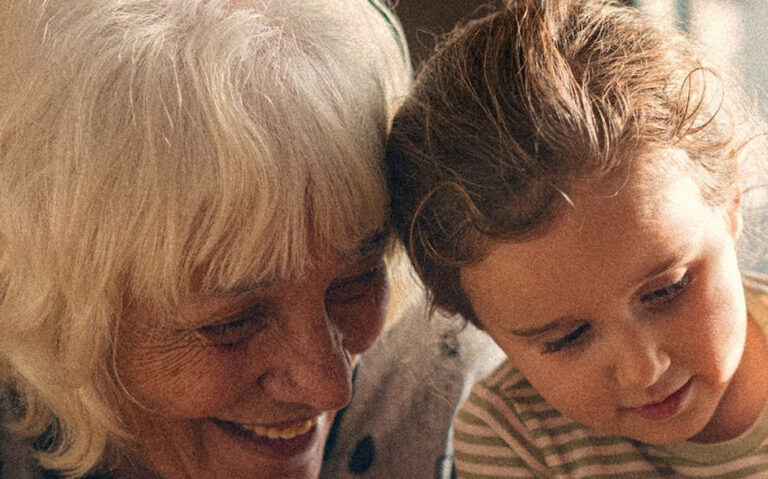
Reforming the law to improve the current complex landscape, making options for kinship care for children simpler and easier to navigate.
We have published our consultation paper on kinship care. The public consultation period will run until 16 October 2026.
How to respond
We invite consultees to submit responses via the online response form. If possible, please use this method.
Alternatively, you can respond by email or by post (see our contact details at the end of this page).
Background (Back to top)
Kinship care has been defined as:
“Any situation in which a child is being raised in the care of a friend or family member who is not their parent for a significant amount of the time. The arrangement may be temporary or longer term.”
(Department for Education, Stable Homes, Built on Love: Implementation Strategy and Consultation (February 2023) p 85)
It is estimated that around 141,000 children live in kinship care arrangements in England and Wales. Most commonly, kinship care will be an alternative to the child entering the care system, or a way of caring for a child who is the subject of a care order.
There are a number of ways to formalise kinship care, including:
- special guardianship orders
- child arrangements orders
- fostering
This variety is confusing and hard to navigate for kinship carers who do not always feel confident that the order underpinning their arrangement is right for their circumstances.
Project (Back to top)
The project considers the scope for reform to simplify and streamline the orders underpinning kinship care placements and how better to support the consideration of kinship care as an option for children who cannot remain with their parents.
It was referred to us as part of the Government’s kinship strategy, published as Championing Kinship Care – The National Kinship Care Strategy, in December 2023. The aim of the project is to reform the law to facilitate kinship care for children. The areas the project considers are set out in the project Terms of Reference.
Our public consultation
On 8 July, the Law Commission published its consultation paper on kinship care. The public consultation period will run until 16 October 2026.
Key proposals
The consultation paper contains provisional proposals to reform kinship care law in England and Wales.
Our provisional proposals include
- a proposal for a new form of kinship care order (“KCO”), a flexible order which could be tailored to reflect the particular circumstances of the child in the kinship care arrangement, as well as those of their parents and kinship carer.
- a KCO would be available to kinship carers only, and would replace, for them, the use of special guardianship orders (“SGOs”) and child arrangements orders (“CAOs”). Existing SGOs and CAOs in favour of kinship carers would be unaffected.
- a kinship parental responsibility agreement (“kinship PRA”), which would enable parents to enter into an agreement with a kinship carer who is also a close relative of the child, granting the kinship carer parental responsibility for the child.
- a kinship PRA could be for any duration from one year up to the remainder of the time until the child reaches 18. A kinship PRA could be entered into before a planned period of kinship care, allowing families to make arrangements for children in advance. We consider that kinship PRAs could be of particular use in a situation where informal kinship care is taking place.
- a proposal to adopt the definition of kinship care contained in section 22I of the Children Act 1989, with some additional eligibility requirements, for the purposes of the new KCO and kinship PRA.
The consultation paper also contains proposals to improve consistency of assessment for kinship foster carers in England and Wales, and we seek consultees’ views on how the assessment process for kinship foster carers in England could be reformed, to reflect the particular circumstances of kinship care.
Finally, we make proposals for reform of certain aspects of SGOs and CAOs, as an alternative to our proposals for introduction of a KCO.
Consultation events
During our consultation period, we have held several in-person events open to all, as well as online events via Microsoft Teams aimed at groups of consultees who may have similar experiences or concerns; local authorities and social workers, legal professionals, and kinship carers. We also held events aimed at parents whose children are or have been in kinship care and those who support them, and young people with experience of kinship care in England. Our last consultation event, for young people with experience of kinship care in Wales, will take place in the near future.
We are grateful to all consultees who have responded to our consultation paper or attended one of our consultation events.
Next steps (Back to top)
Our public consultation will close on 16 October. We will then consider consultees’ responses to our provisional proposals. We will later publish a final report setting out the conclusions that we reach and our recommendations to the UK Government and Welsh Government for reform of the law.
We anticipate that our final report, containing our recommendations for law reform, will be published in autumn 2027.
Documents (Back to top)
Consultation paper and related documents
Terms of reference
Contact (Back to top)
Contact us if you have any queries about this project.
Email: kinshipcare@lawcommission.gov.uk
Post: The Law Commission
1st Floor, Tower
52 Queen Anne’s Gate
London
SW1H 9AG